

University of Regensburg

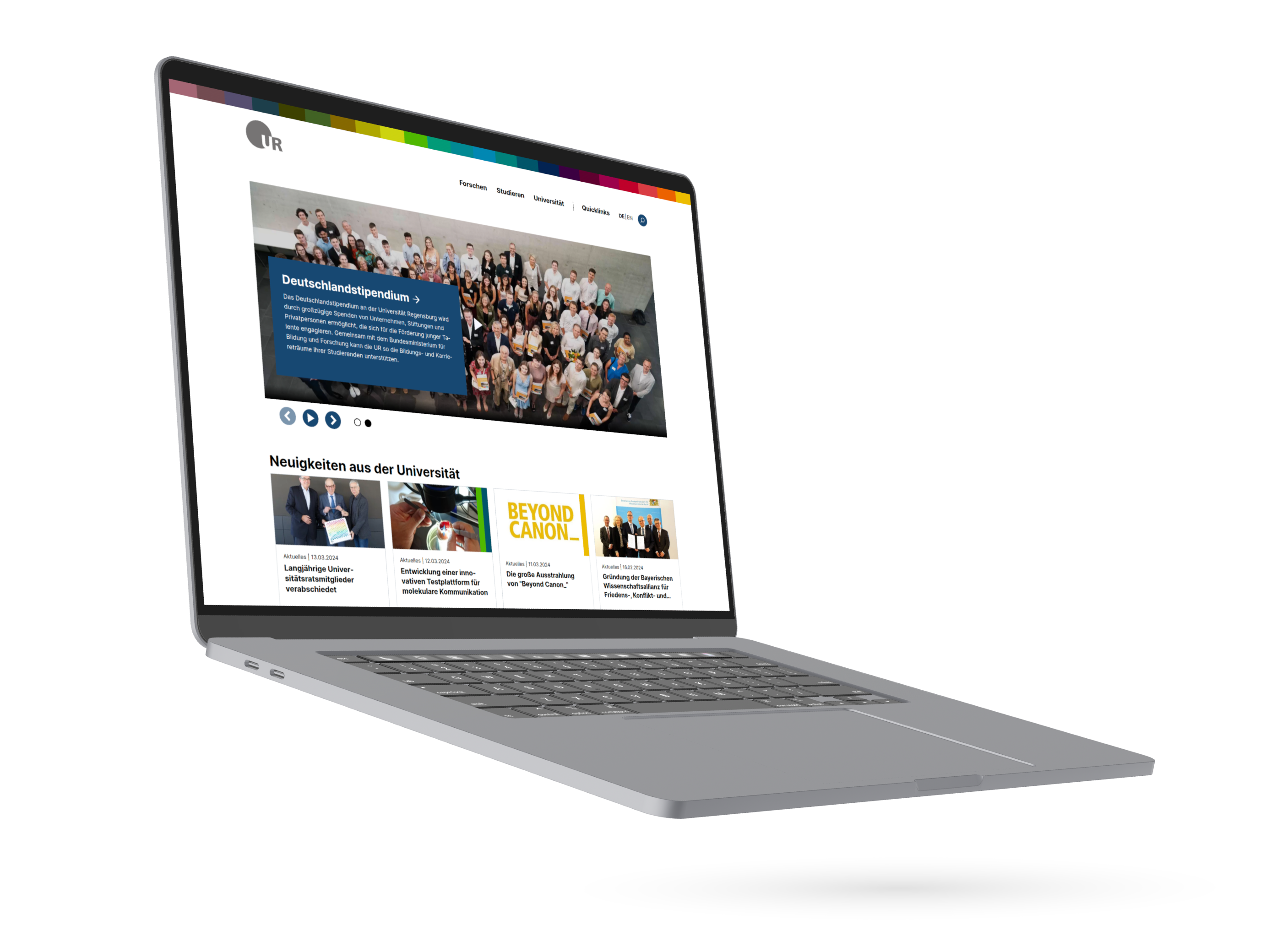
University of Regensburg: Enterprise-scale TYPO3 v12 relaunch

Relaunch of the University of Regensburg website based on TYPO3 v12, with a focus on user-centred UX, BITV-compliant implementation and a scalable white-label approach for satellite websites. Efficient editorial and migration processes make a very large volume of content manageable.

University of Regensburg
CMSTYPO3 v12
ArbeitsweiseAgile using Scrum (sprint-based)
SchwerpunkteUX/IA, Accessibility (BITV), White label/Satellite sites, Migration, QA

Die Ausgangslage

Womit die Hochschule zu uns kam.

The University of Regensburg’s existing web landscape needed to be modernised and consolidated. In addition to the requirements for accessibility and a contemporary user experience, the main challenge was the sheer scale of the project: a large number of content pages and numerous satellite websites that had previously been difficult to manage in a consistent manner. A relaunch of this scale is less a standalone project than a platform development involving diverse responsibilities and an established satellite structure.

University of Regensburg
01

Very large number of pages

A large number of content pages had to be migrated and kept up to date on an ongoing basis. Without standardised building blocks, the editorial maintenance would have been virtually unmanageable.

02

Inconsistent satellite websites

Until now, it has not been possible to maintain and develop numerous satellite websites in a consistent manner. There was no common system in place to ensure consistency without compromising the individual character of the sites.

03

Accessibility as a duty

The implementation had to comply with the BITV and ensure that accessibility was a consistent quality criterion. This applied equally to the structure, components and content.

04

Diverse responsibilities

With so much content and responsibilities spread across various teams, we needed a setup that would work in the long term. Clear processes and guidelines were essential for a controlled roll-out.

Das Vorgehen

Wie wir es gelöst haben.

We built the platform using an agile approach in sprints, from UX and IA design through to reusable templates and a guided migration process with end-to-end quality assurance.

01

Concept and UX/IA

We designed the information architecture and key page types. This resulted in a UX-focused structure and template logic that serves as the basis for consistent user guidance.

02

Iterative implementation in sprints

The project was implemented using a sprint-based approach in line with Scrum, with regular coordination meetings and reviews. This ensured that the work remained transparent and predictable.

03

A modular system comprising templates and components

We have developed a consistent UI system, as well as reusable templates and content blocks for different page types. This lays the foundation for reusability and white-label capability.

04

White label for satellite websites

A white-label approach allows numerous satellite websites to be integrated into a unified system without losing their independence. This ensures consistency whilst maintaining flexibility.

05

Migration and editorial processes

We have set up migration and editorial workflows for large volumes of content, supported by guidelines and quality checks. The administration and maintenance processes in TYPO3 have been optimised as part of this.

06

Quality assurance and release

We have ensured quality through staging, QA cycles and acceptance testing. A clear release process enables a controlled rollout.

Das Ergebnis

Was sich messbar verändert hat.

The University of Regensburg has a central, scalable TYPO3 v12 platform for its main website and satellite sites.

Weitere Referenzen

Noch mehr Beweise.

Erstgespräch — 30 Minuten, ohne Pitch-Deck.

Ein ähnliches Vorhaben?

University of Regensburg: Enterprise-scale TYPO3 v12 relaunch